• Spend SG$500 to get complimentary shipping.

2000 Château Latour, Pauillac, Bordeaux
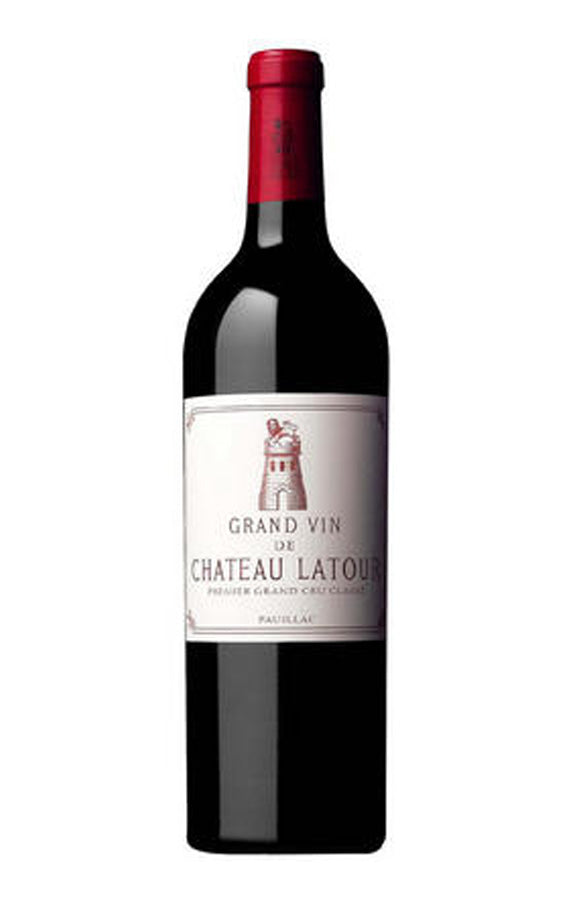
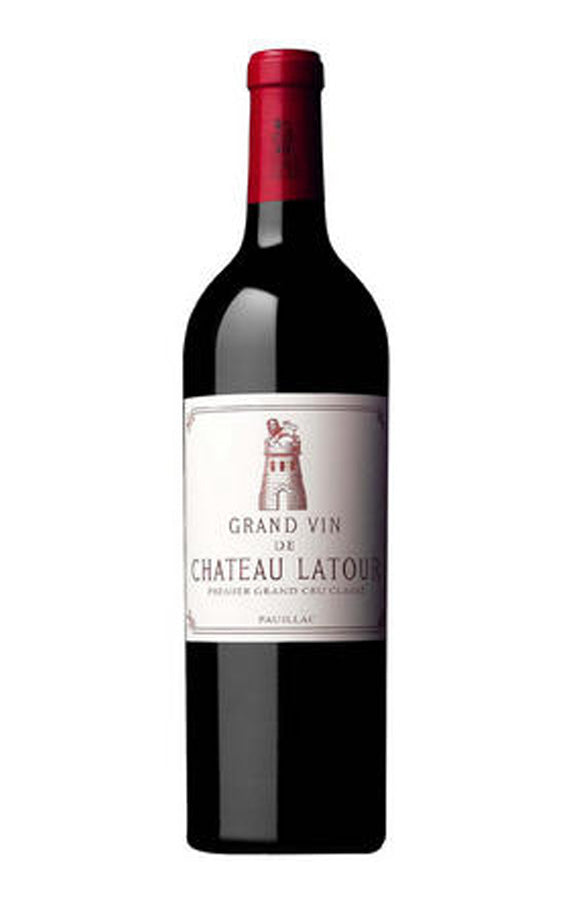
2000 Château Latour, Pauillac, Bordeaux
Red • Dry • Full Bodied • Cabernet Sauvignon (77%), Merlot (16%), Cabernet Franc (4%), Petit Verdot (3%)
Ready - at best
Jane Anson 98/100
Neal Martin, Vinous 99/100
Lisa Perrotti-Brown MW 97/100
Wine Advocate 98/100
Jancis Robinson MW 18/20
James Suckling 100/100
Decanter 99/100
Stephen Tanzer 97/100
Log in to add to wishlist
Code: 2000-12750-8006013
Description

2000 saw a warm, dry July and August with a small amount of rain from mid-September onward. Composed of 77% Cabernet Sauvignon, 16% Merlot, 4% Cabernet Franc and 3% Petit Verdot, the 2000 Latour has a deep garnet color and is showing a good amount of evolution, sporting mature notes of fried exotic spices, hoisin, unsmoked cigars and fruitcake with hints of incense, potpourri, cast iron pan and charcuterie.

Medium-bodied, soft, plush and savory in the mouth, it has a long, mineral-tinged finish. 14,000 cases were made this year, representing 48% of production.

Lisa Perrotti-Brown, Wine Advocate (February 2019)

  • Colour
    Red
  • Sweetness
    Dry
  • Vintage
    2000
  • Alcohol
    13%
  • Maturity
    Ready - at best
  • Grape
    Cabernet Sauvignon (77%), Merlot (16%), Cabernet Franc (4%), Petit Verdot (3%)
  • Body
    Full Bodied
  • Producer
    Château Latour

Pauillac

The aristocrat of the Médoc boasts 75 percent of the region’s First Growths, with Grand Cru Classés representing 84 percent of production. Pauillac's First Growths each have their own unique characteristics: Ch. Lafite Rothschild produces the region’s most aromatically-complex and subtly-flavoured wine, while – with its high percentage of Cabernet Sauvignon – Ch. Mouton Rothschild can produce a decadently rich, fleshy and exotic wine.

Pauillac is the aristocrat of the Médoc boasting boasting 75 percent of the region’s First Growths and with Grand Cru Classés representing 84 percent of Pauillac's production. For a small town, surrounded by so many familiar and regal names, Pauillac imparts a slightly seedy impression. There are no grand hotels or restaurants – with the honourable exception of the establishments owned by Jean-Michel Cazes – rather a small port and yacht harbour, and a dominant petrochemical plant. Yet outside the town, there is arguably the greatest concentration of fabulous vineyards throughout all Bordeaux, including three of the five First Growths.

Bordering St Estèphe to the north and St Julien to the south, Pauillac has fine, deep gravel soils with important iron and marl deposits, and a subtle, softly-rolling landscape, cut by a series of small streams running into the Gironde. The vineyards are located on two gravel-rich plateaux, one to the northwest of the town of Pauillac and the other to the south, with the vines reaching a greater depth than anywhere else in the Médoc.

Pauillac's first growths each have their own unique characteristics; Lafite Rothschild, tucked in the northern part of Pauillac on the St Estèphe border, produces Pauillac's most aromatically complex and subtly-flavoured wine. Mouton Rothschild's vineyards lie on a well-drained gravel ridge and - with its high percentage of Cabernet Sauvignon - can produce (in its best years) Pauillac's most decadently rich, fleshy and exotic wine. Latour, arguably Bordeaux's most consistent First Growth, is located in southern Pauillac next to St Julien. Its soil is gravel-rich with superb drainage, and Latour's vines penetrate as far as five metres into the soil. It produces perhaps the most long-lived wines of the Médoc.

Château Latour

Château Latour is a wine estate in Pauillac, part of the Haut-Medoc sub-region on the Left Bank of Bordeaux. The estate’s history dates back to at least the 14th century, though vineyards were not established here until the 17th century. The estate is located at the southern edge of the Pauillac appellation, bordering the St Julien vineyards of Château Léoville Las Cases. Latour is one of the five First Growths of the 1855 classification, occupying the top tier alongside Châteaux Lafite Rothschild, Margaux, Haut-Brion, and Mouton Rothschild.

Latour is owned by François Pinault, one of France’s wealthiest people. It forms the jewel in the crown of Pinault’s Artémis Domaines, itself part of the larger Groupe Artémis. Other wineries within the portfolio include Clos de Tart and Domaine d’Eugénie in Burgundy; Château Grillet in the Rhône Valley; Champagne Jacquesson; Eisele Vineyard in California’s Napa Valley; and Maisons et Domaines Henriot, which includes holdings in Champagne, Burgundy, and Oregon.

The day-to-day running of Latour is entrusted to the dynamic Frédéric Engerer. Under his stewardship, a major programme of investment has taken place. In 2012, Latour announced that it would no longer offer its wines as part of the Bordeaux En Primeur campaign. Instead, the wines are kept at the estate until such a time as they are ready to be opened and enjoyed. They are then offered through the La Place de Bordeaux distribution system several years after the vintage.

There are three wines produced here. Château Latour, the grand vin, is produced from vines immediately surrounding the château, from the vineyard area known as L’Enclos. Les Forts de Latour, the second wine, was created in 1966. It is now regarded as a great wine in its own right, certainly worthy of Classified Growth status. A third wine, Pauillac de Latour, is usually the product of young vines.

The vineyard is planted to a majority of Cabernet Sauvignon, along with some Merlot and small amounts of Cabernet Franc and Petit Verdot.

Need help?
Please contact us from the contact form